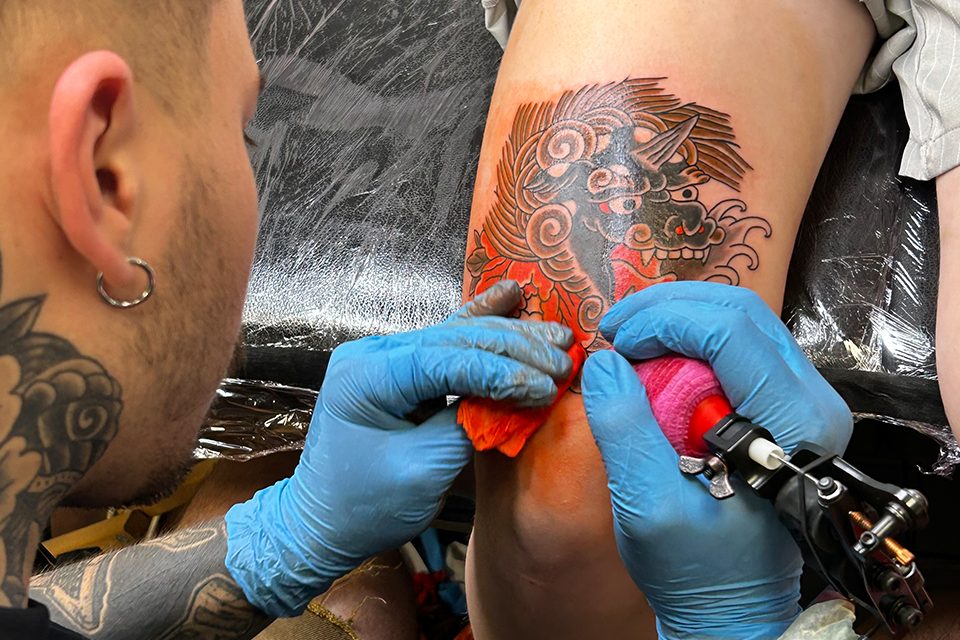
Horimono is a traditional Japanese tattoo style that has deep roots in Japanese culture and history.
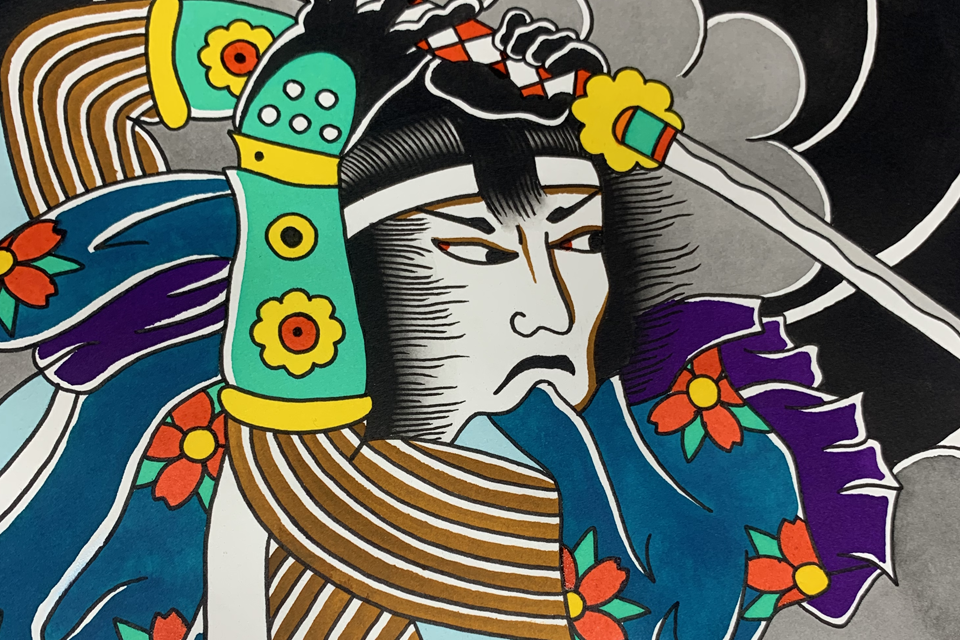
Horimono, often called irezumi, originated in Japan during the Edo period (1603-1868). Irezumi motifs are often based on traditional Japanese woodblock prints known as Ukiyo-e. Some of the most renowned Ukiyo-e masters include Katasushika Hokusai, Utagawa Kunyoshi, and Kawanabe Kiyosai.
Irezumi literally means putting ink in the ink, and in the past it was used by the lower classes to mark criminals. Later, the Tokugawa shogunate abolished this practice, and with it the bad connotations of the name Irezumi disappeared.
Horimono motifs draw from rich Japanese mythology and Buddhism, which came to Japan from India and China.
The most common motifs include dragons, koi carp, warriors, sakura, namakubi, various gods, and talismans for good luck and protection.
The fascinating thing about Japanese tattoos is that every single element that the design contains is there for a specific reason and has its own meaning that complements the rest of the composition. Each irezumi design has deep symbolism and rules that must be followed otherwise the tattoo loses its authenticity and meaning. Among the frequent depictions of motifs are also scenes from various stories and legends, the most famous example being the heroes from the story Suikoden or the legend of the golden boy named Kintaro.
Traditionally, horimono is tattooed by hand using a bamboo stick to which the tattoo artist ties needles and uses it to tattoo the client. This technique is called tebori.
Nowadays, most foreign tattoo artists, including me, use electric machines because it is easier and faster, but many Japanese still tattoo using the traditional tebori method. You will often find that the tattoo artist will use a machine for the lines but colors by hand with a stick.
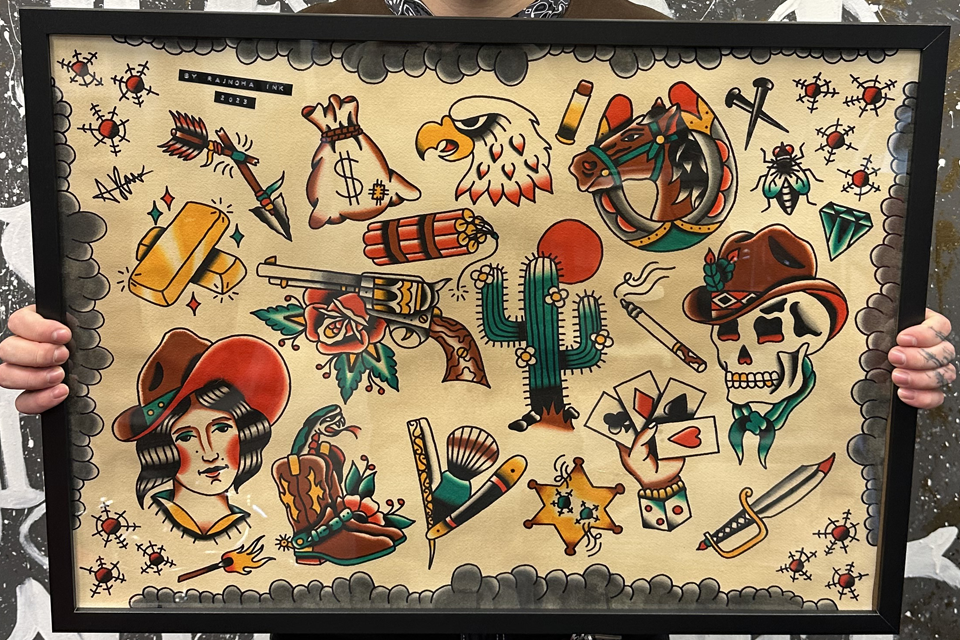
Irezumi is known for its large-scale tattoos, such as the entire back, sleeve, or chest, but individual motifs can also be tattooed in smaller sizes and without a background, similar to the American traditional style.
Socially, and especially in Japan, horimono is associated with the Yakuza. Yakuza members are known for covering their bodies with various irezumi motifs, a custom they inherited from their criminal ancestors in the Edo period, but in the past and present, ordinary people have also been tattooed in this style, and this stigma is slowly disappearing. One example from the Edo period was firefighters who had dragon tattoos on their backs. According to Japanese mythology, the dragon is the only creature that can survive a fire, and firefighters wore it on their bodies as a symbol of protection from fire.
Horimono is both an artistic expression and a cultural phenomenon, deeply rooted in Japanese history and tradition. Tattooers who practice this style often undergo years of training, and their work is highly regarded to this day.
Pioneers in this style include, for example, Horitomo, Horiyoshi III, Ichibay, Horiken Shibuya, Horihiro, Horihama, Monta Morino and many others.